

A zero-to-one content strategy: how I built a founder-led ABM company’s content engine from a blank slate.
Most content engagements begin with a request for blog posts. The best ones begin with a harder question: what should this company be known for, and why would a buyer believe it?
This one was the second kind. When the founder reached out to me on LinkedIn, the company, a B2B account-based marketing (ABM) firm, had a live website, a strong product, a roster of enterprise clients, and almost no content of its own.
A blank page is where I prefer to start, before the wrong processes and habits set in.
Here is how I built their content engine from that blank page, a genuine 0-to-1 content strategy, and the one lesson it left me with.
Where the company stood
The company sells account-based marketing to B2B technology companies. Its buyers were already searching for answers, and its competitors were already ranking for them. The company was not in those results.
The picture was clear from our first call.
They had no SEO or digital marketing underway; the honest answer was “not right now.” Social posting was manual. There was no analytics, no content calendar, and no plan tying any of it together.
What they did have was a strong product and a clear ambition: reach the right buyers, in the right markets, within a sensible timeframe.
Why I refused to start writing first
Before I wrote a single piece, I ran a structured discovery.
Strategy is a set of decisions, and decisions are only as good as their inputs.
The discovery worked through a handful of questions:
- Who did the company serve, and who actually signed the contracts?
- Which competitors were winning the attention the company wanted?
- What frustrated its buyers before they had heard of the company?
- What could the company claim that no competitor credibly could?
- What did they already have to build on, and where did their buyers spend their time?
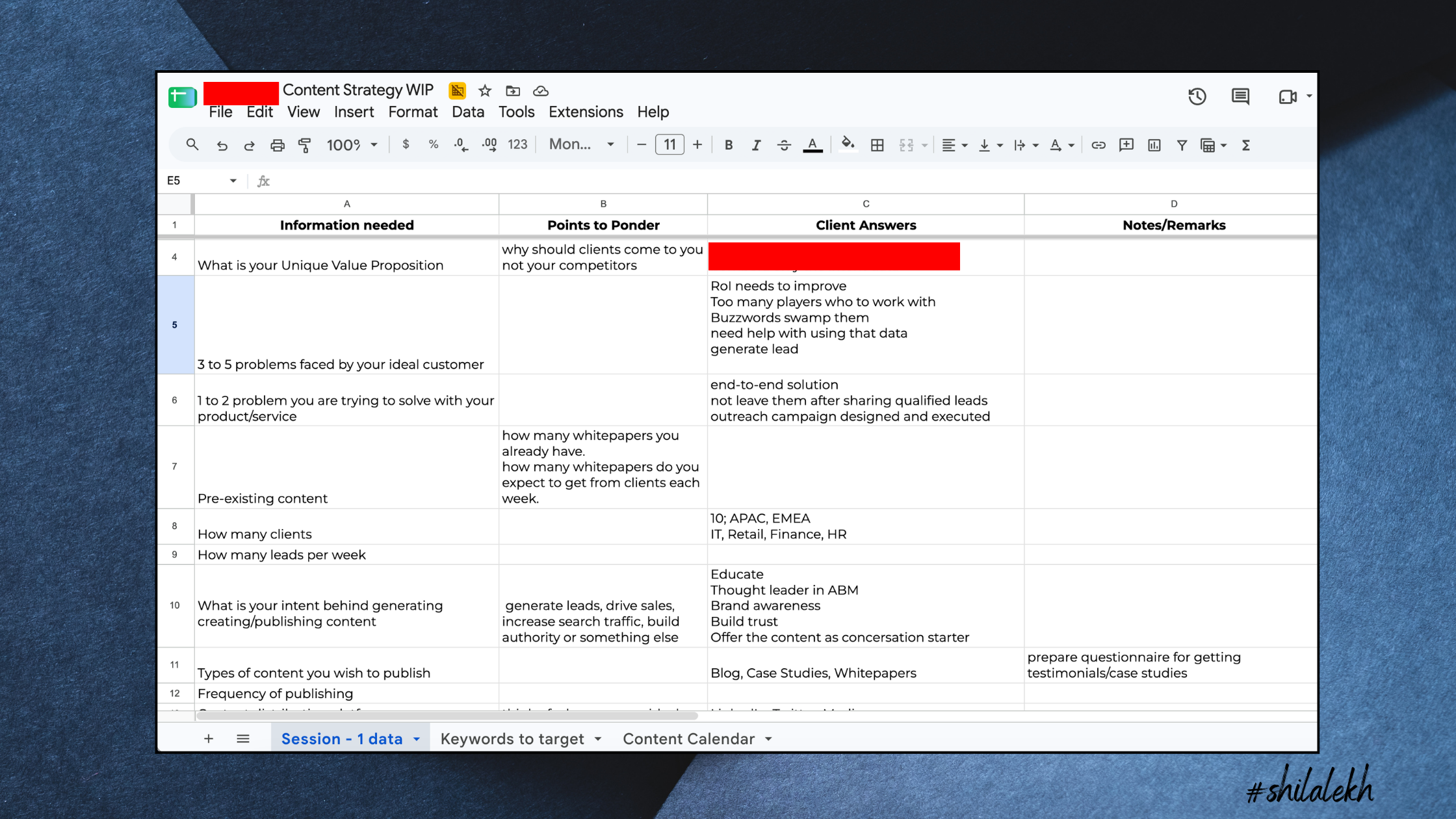
The answers pointed to a company with a real edge but the wrong starting point for its message. It did not have a messaging problem so much as a matching problem. It needed the right message in front of the right buyer.
A few findings shaped everything that followed:
- The buyers were field-marketing and demand-generation leaders, alongside enterprise IT, HR, and finance teams.
- The competitors were well-funded incumbents with years and real budget behind them. The market was crowded, yet none of them were selling on psychographics.
- The buyers were tired and sceptical. They faced a long list of near-identical vendors, a wall of buzzwords, and pressure to prove a return.
- The edge was psychographic profiling, built on the OCEAN personality model and a proprietary intent-and-AI engine. It was powerful but too technical for most buyers, and many had never heard of psychographic analysis at all.
So a large part of my job was translation. I had to take a sophisticated capability and make it clear, concrete, and useful to a reader coming across it for the first time.
What the company could own
This is where a content strategist earns their fee, and a content writer does not.
The keyword landscape was crowded with competitors who had spent years and real budget getting there. Competing head-on, term for term, would have been slow and costly. So I split the content into two tracks.
The first track competed.
These were blogs targeting the contested ABM terms the incumbents already ranked for. They were table stakes, so the company could at least appear in the searches its buyers ran every day.
The second track claimed ground the competitors had left open: psychographics.
I built a body of content around the idea that how a buyer thinks, not only what they click, should shape the outreach. That included explainers, use cases, and points of view on psychographic targeting. No competitor was making that case, so every piece reinforced territory only the company could hold.
Turning the content strategy into a system
A strategy only performs when it executes well and runs on a rhythm, when everyone can see it.
So before the calendar, I wrote the strategy down.
It was short, 3-4 pages, but it did something important. It gave the founder, the marketers, and me a single source of truth: who we were writing for, what we wanted to be known for, and why each piece existed.
A documented strategy is what keeps a small team from drifting into scattered, one-off content.
With that agreed, I built a three-month content calendar. It paired each original piece with a plan to promote it, so a single blog went on to work across LinkedIn and Twitter instead of being published once and forgotten.
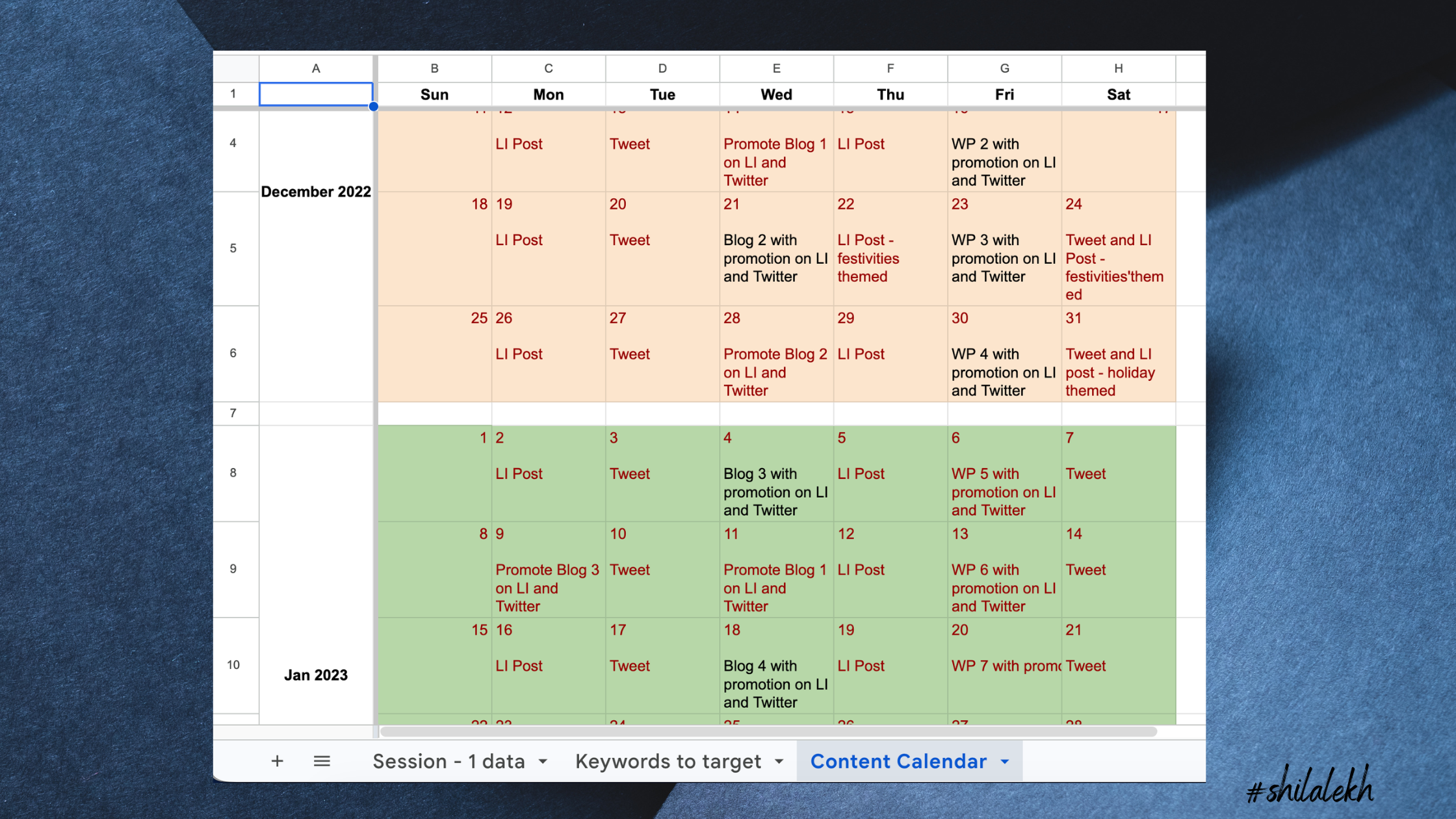
The work spanned blogs, case studies, and social posts, and it ran in close partnership with the team.
I worked directly with the founder and the marketing and sales leads, and refined each piece against their input. I also coordinated with their designer, so the copy and the visual assets shipped together rather than as separate afterthoughts. When the founder asked to reframe a lead’s persona from “Socializer” to “Innovator,” I reworked the piece until it matched how they understood their own customers.
The most important output was the case study, the asset the sales team could carry into live deals. I turned the client’s most compelling results into clear, credible accounts a prospect could follow and a salesperson could send.
One told how the company secured 200-plus attendees in 4 weeks for a global cloud provider’s virtual conference.
Another followed a $1.2M enterprise deal that closed while the campaign was still running, and showed how psychographic profiling turned a single “Innovator” lead into a signed customer.
The case studies their clients wouldn’t approve
Some of the most useful work never appears on a content calendar. The sales enablement I did here is a good example.
The sales team needed case studies to close with. But the company’s enterprise clients were slow to approve the use of their names, and some declined.
Sales could not wait on a sign-off that might never arrive.
So I built a way around the blockage, because the alternative was a sales team with nothing credible to show.
First, I created anonymised versions of the approved case studies, with names and identifying details removed, so sales had proof to use straight away.
Second, I helped the team craft the outreach they could send those clients later, to ask for a quote or permission to be named.
The immediate need was met, and the path to named case studies stayed open.
What I do differently now
This engagement taught me one lesson I now apply from the first day.
When I started, the company had no analytics in place. I flagged it and requested a Google Analytics setup, but later than I should have. So we worked for a time without a baseline to measure against.
Now I put measurement in from the start.
Content has to show that it is drawing the right readers and feeding the pipeline, not simply appearing on schedule.
So I set up the tracking alongside the strategy and we agree at the outset on what success will look like.
0 to 1 content strategy is what excites me the most
If you are a founder with an empty content slate and a product worth talking about, that is the problem I most like to solve.
A note on the figures: the results above are the client’s and its customers’. My role was the content strategy and the writing that turned those results into assets the business could use.