It was just an email. A few lines. Professional, polite, final.
“We are no longer hiring contractors outside of the US.”
I read it twice. Then I closed my laptop and stared at the wall for a while.
This was Client 1 — one of my two anchor clients. The kind of client that pays the bills, funds the emergency reserve, and lets you say no to projects that don’t excite you. Gone…Pffft… Just like that.
Client 2 didn’t even send an email. They just… fizzled out. One project every two or three months had been the rhythm, so it took me sometime to realise they were not coming back with more projects. So no dramatic ending; just a slow fade into nothing.
By the end of June 2024, both were gone.
I have written before about the financial frameworks that helped me survive this. The emergency fund. The lean expenses. The systems I had built after the COVID-19 wipeout of 2020.
But frameworks don’t tell you what it feels like to watch your inbox and see nothing. They don’t explain the shame of dipping into savings you swore you’d only touch in emergencies. They don’t capture the spiral.
This post is about the spiral. And how I climbed out.
The First Few Weeks: Devastation Dressed as Practicality
I didn’t tell my family immediately.
Somehow, the “we don’t hire outside the US” line felt like a personal failure. It wasn’t, of course. I knew that logically. But logic doesn’t help when you’re lying awake at 2 AM wondering what you did wrong.
I’ve lost clients before. It is part of freelancing life. And my usual playbook has always worked — double down on marketing, reach out to past clients, be more active on LinkedIn and job boards. Within a month, something lands.
This time, it didn’t.
The usual effort yielded nothing. And that had me spiralling harder. Because now it wasn’t just about the lost clients. It was about whether my usual approach even worked anymore. Whether I was still relevant. Whether the market had moved on without me.
I didn’t have anyone to talk to about this. Not really. When it comes to professional challenges, my support system is thin. My husband understands business, but this was different. This was about identity. And that’s harder to articulate.
The Excuse That Was Also a Lifeline
Around this time, my husband and I were in the process of leasing out a rundown resort. It required attention, capital, and a lot of running around.
I threw myself into it.
Looking back, I can see that I used it as an excuse. “I’m too busy with the resort to focus on pitching.” “I’ll get back to marketing once this is sorted.” Classic avoidance dressed as productivity.
But the thing is that it was probably also survival. I had something to pour my energy into when my freelance identity felt shaky. Something tangible. Something that didn’t reject me via email.
Sometimes what looks like avoidance is just your brain protecting you from a freefall.
The Trap of Lower-Paying Work
By August, I was desperate enough to take on two lower-paying jobs. Just to keep cash flowing. Just to feel like I was doing something.
It felt like a step backward.
Not just professionally, but emotionally. Every hour I spent on those projects felt like time I could have spent building something better. And the money wasn’t even that necessary; my emergency fund definitely had me covered for that much amount.
But the act of dipping into reserves? That was its own kind of torture.
Every rupee I withdrew felt like an expense I should have cut. There was no logic behind it. I had saved that emergency fund precisely for moments like this. But spending it made me feel like a failure. Like I was bleeding out slowly and watching it happen.
I stopped taking low-paying work after those two projects. Not because I suddenly felt confident, but because I realised I was trading peace of mind for an illusion of productivity.
The Enough-Is-Enough Morning
And one day in October — around Durga Puja — I woke up and just… decided.
Enough.
I don’t remember what triggered it. Maybe it was the journalling. You see I write every day and have the habit of going over the past week of journalling every Saturday or Sunday. So over time, the pages become a mirror. I could see myself changing in those entries. Could see the spiral documented in my own handwriting.
And I could see that I was stuck.
So I went back to basics. Morning routine first. Walking. Journalling. Writing fiction — something I had completely abandoned during the previous months.
It didn’t fix everything overnight. But it gave me a container. A structure. Something to hold onto when everything else felt uncertain.
The shift was gradual. There was no single “I’m myself again” moment. But turning the pages of my journal over the following weeks, I could see the tone changing. Fewer spirals. More clarity. Slowly, slowly, something that looked like steadiness.
What I Would Tell You (If You’re Going Through This)
If a solopreneur friend came to me tomorrow and said, “I just lost my biggest client,” here’s what I would say.
First: Feel it. Don’t pretend it doesn’t hurt. Don’t jump straight into hustle mode. Sit with the disappointment, the fear, the shame if it’s there. Talk to someone you trust — even if it’s just to say “this is hard.”
If you don’t have that person, that’s its own problem to solve. But later. Right now, just acknowledge what happened.
Second: Toughen up mentally. I know that sounds contradictory, but it’s not. The market is getting harder. AI is changing everything. Client loss is not a one-time event you bounce back from — it’s a recurring reality of this life. The sooner you accept that, the less each blow will devastate you.
Third: Don’t take low-paying work just to stay busy. If you have savings, use them. That’s what they’re for. Your time and energy are worth protecting. Spend them on building skills, building networks, building something that compounds — not on projects that make you feel small.
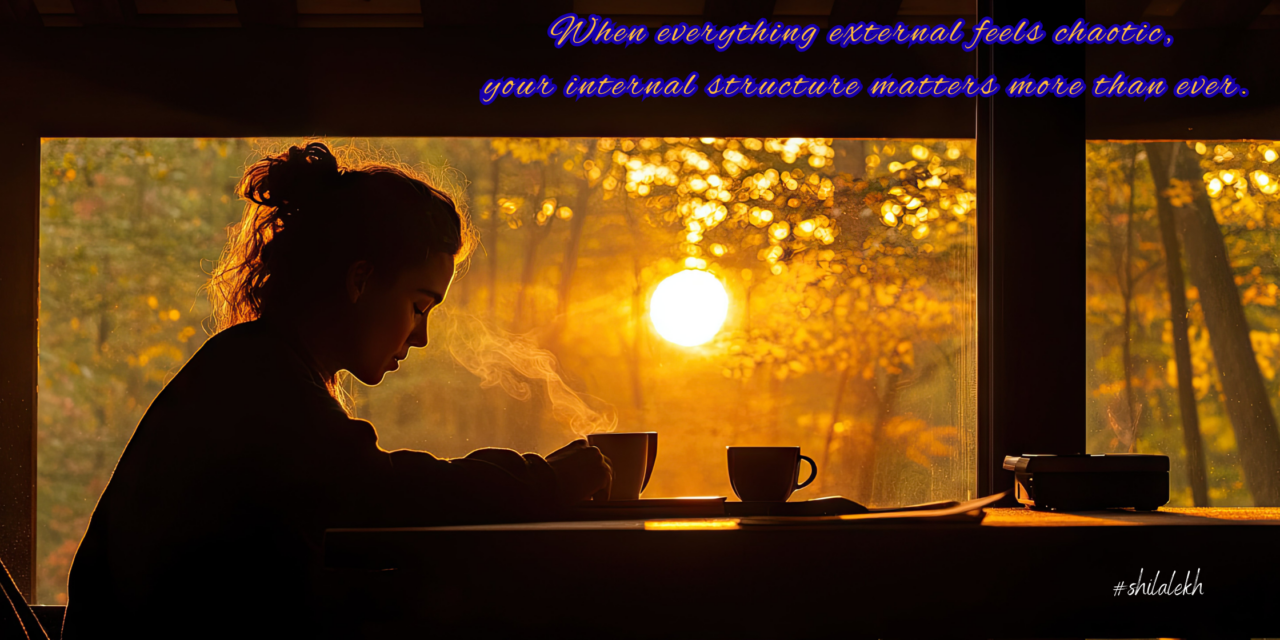
Fourth: Get your routines back. When everything external feels chaotic, your internal structure matters more than ever. Walk. Journal. Indulge in your favourite hobbies. Do the thing that makes you feel like yourself. It won’t solve the problem, but it will give you the clarity and mental strength needed to solve it.
And finally: Look at your support system. If you don’t have people you can trust with your professional struggles, ask yourself why. Were you too busy working to cultivate those relationships? That’s worth fixing. Because solopreneurship is lonely enough without also being alone.
The View from Here
It’s January 2026 now. I made it through.
Not unscathed. Not unchanged. But intact.
I am still figuring out the right mix of clients. Still building pipelines I should have built years ago. Still learning that survival is only the first step — and that thriving requires sustained effort I haven’t fully committed to yet.
But I know something now that I didn’t know before June 2024.
The spiral is survivable. The shame fades. The routines hold you up when nothing else will. And sometimes, the thing that looks like an excuse is actually a lifeline.
You just have to be kind enough to yourself to grab it.
Five weeks ago, I started a Substack newsletter called Famine-Proof Freelancer for exactly this reason. Because I know what it feels like to watch your inbox and see nothing. To spiral. To wonder if the market has moved on without you.
If any of this resonated, that’s where I’m writing more about building a freelance business that can survive the lean months — financially and emotionally.